AuDHD Coaching

AuDHD Coaching

When you’re Autistic and ADHD, the standard ADHD strategies stop working.
Grounded support that holds both, not one or the other.

AuDHD Coaching with Janine

You’ve read the ADHD books. You’ve tried the systems. Some of them even worked — for about a fortnight.

Then something you can’t quite name pulled the whole thing apart.
If you’re AuDHD — Autistic and ADHD — that’s not a discipline problem.

It’s what happens when advice built for one brain meets a nervous system that’s running two sets of needs at once, and they don’t always agree.
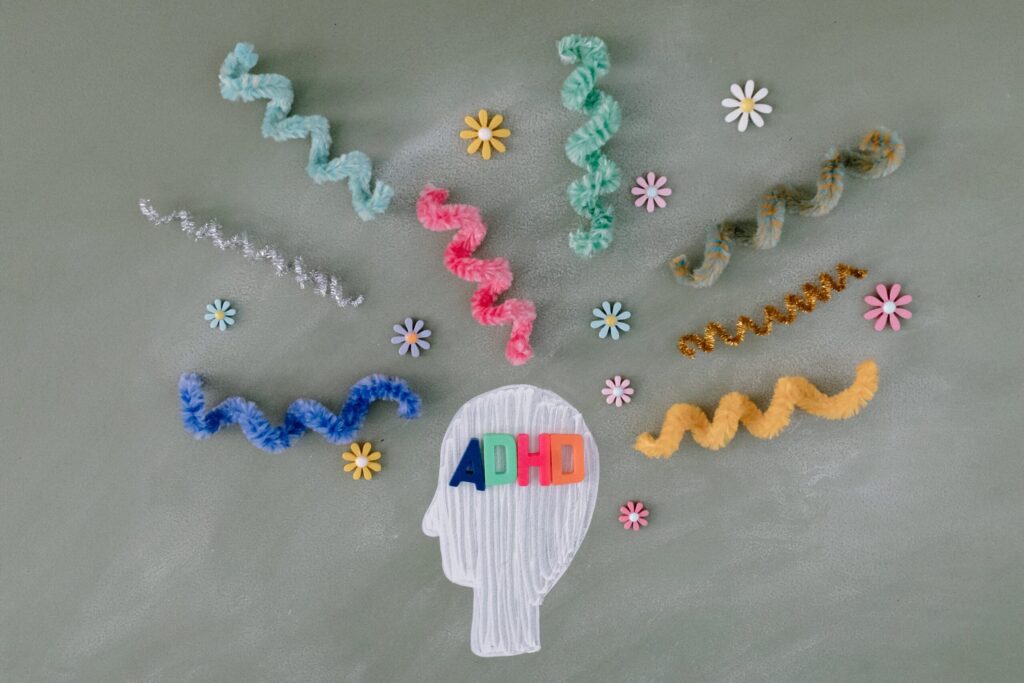
image of a hear with adhd writen in words and coloured squiggles gravitating out the top of the head

What ADHD advice doesn’t account for

Most ADHD coaching assumes a fairly specific setup: you’re understimulated, you need novelty, you’ll do better with external accountability, and the goal is to get more done.

Some of that might be true for you. Some of it might be actively making things worse.

You’re told to switch tasks when you lose interest. But if your attention runs deep and single-channel — what’s often called monotropism — being pulled out of a task isn’t a reset. It’s a small violence. You lose the thread, and getting back in costs more than the break saved.
You’re told to seek stimulation. Meanwhile your sensory system is already at capacity from the fluorescent lights, the open-plan office, and the shirt.
You’re told to build habits and stick to them. But the moment something becomes an expectation — even one you set yourself — it stops being possible. That’s not laziness or self-sabotage. Demand sensitivity is real, and the standard coaching model runs on demands.
You’re told accountability will help. For some AuDHD people it does. For others, an accountability partner is just another person to mask for.
You’re told to push through the discomfort. You have been pushing through for thirty years. That’s why you’re tired.

The ADHD parts of you want movement, novelty, momentum. The Autistic parts want predictability, depth, and enough quiet to think. Neither one is wrong. They’re both you.

image of a hear with adhd writen in words and coloured squiggles gravitating out the top of the head

What we actually do

We start with how you’re built, not with what you’re failing to do.

That means getting curious about the specifics: where your energy actually goes, what a demand feels like in your body before you name it, which transitions cost you the most, what your sensory baseline is on a good day versus a hard one, and where you’re masking without noticing.

From there we build things that fit. Not systems that require you to be a different person on a Tuesday.

Some of what we might work on:

Understanding how AuDHD shows up for you — because the combination isn’t the same for any two people
Working with monotropic attention instead of fighting it
Recognising demand sensitivity and finding ways around it rather than through it
Sensory and energy management as a foundation, not an afterthought
Recovering from burnout, and building a life that doesn’t quietly rebuild it
Unmasking — at whatever pace is safe for you, in whatever contexts you choose
Self-advocacy and workplace adjustments that account for both diagnoses
Making space for rest, special interests, and the things that actually matter to you

Sessions are paced to fit you. We work with what’s real today — your capacity, your nervous system, your week — not where you think you should be by now.

And there’s room for laughter. If we haven’t laughed at least once, we’ve probably overcomplicated it.
Who I work with

Neon sign Thing about things differently
Late-diagnosed AuDHD adults who are capable, thoughtful, and quietly exhausted.

People who’ve held it together for years and are now looking for something more sustainable.

People who got the ADHD diagnosis first and the Autism piece later, and are still recalibrating.

People who suspect they’re AuDHD and haven’t pursued a formal assessment — which is valid, and which I don’t require.

You don’t have to explain yourself here. The grief, relief, exhaustion, and slow reordering of your own history that comes with late diagnosis — I know it from the inside.

Why Me

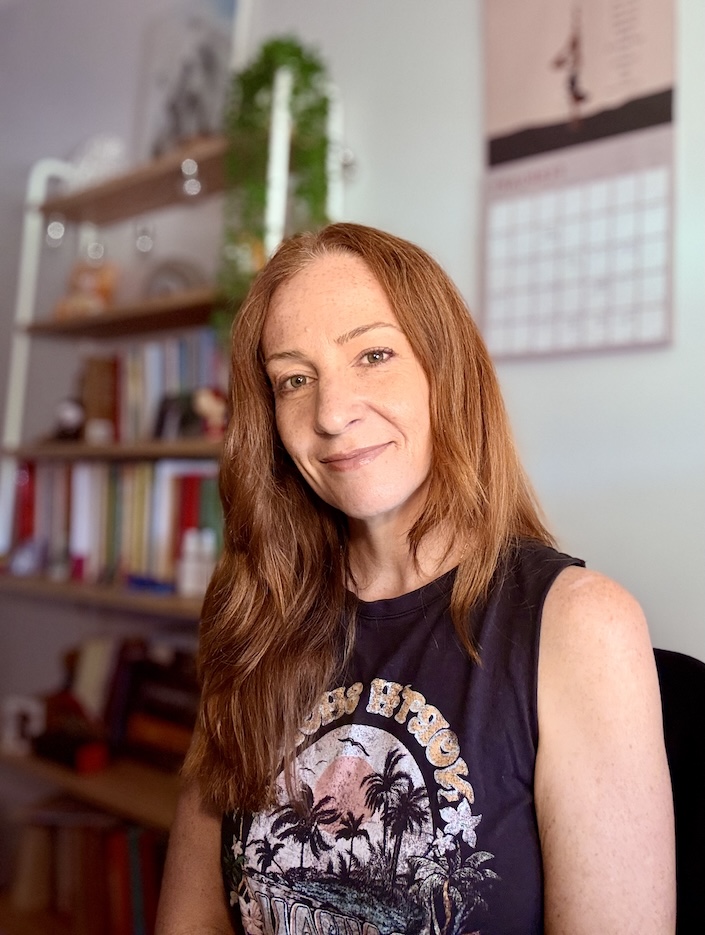
Janine Defontaine in her office Coaching page

I was diagnosed with ADHD, Autism, and complex PTSD at 45, after years of burnout and pushing through. That diagnosis didn’t fix anything. What it gave me was context, and permission to stop treating exhaustion as a personal failure.

I’m a Certified Advanced ADHD Coach and Certified ADHD Practitioner, with additional training in life coaching, health and wellness coaching, and mental health first aid. I’ve been running my own business for over eleven years, across corporates and not-for-profits.

I’m not here to optimise you. Your brain isn’t broken and it doesn’t need fixing.

Read more about how I work.

Common questions

Start with a conversation

A free 30-minute discovery call. No pressure, no sales pitch — just a conversation to work out whether this feels like the right fit.
Book whenever you’re ready.