It’s winter in Australia, and my ADHD/AuDHD brain has entered what I can only describe as hibernation mode with admin responsibilities.
The cold? Rude.
The dark mornings? Uncalled for.
The transitions? Suddenly a full strategic operations meeting.
The sensory stuff? Very much present.
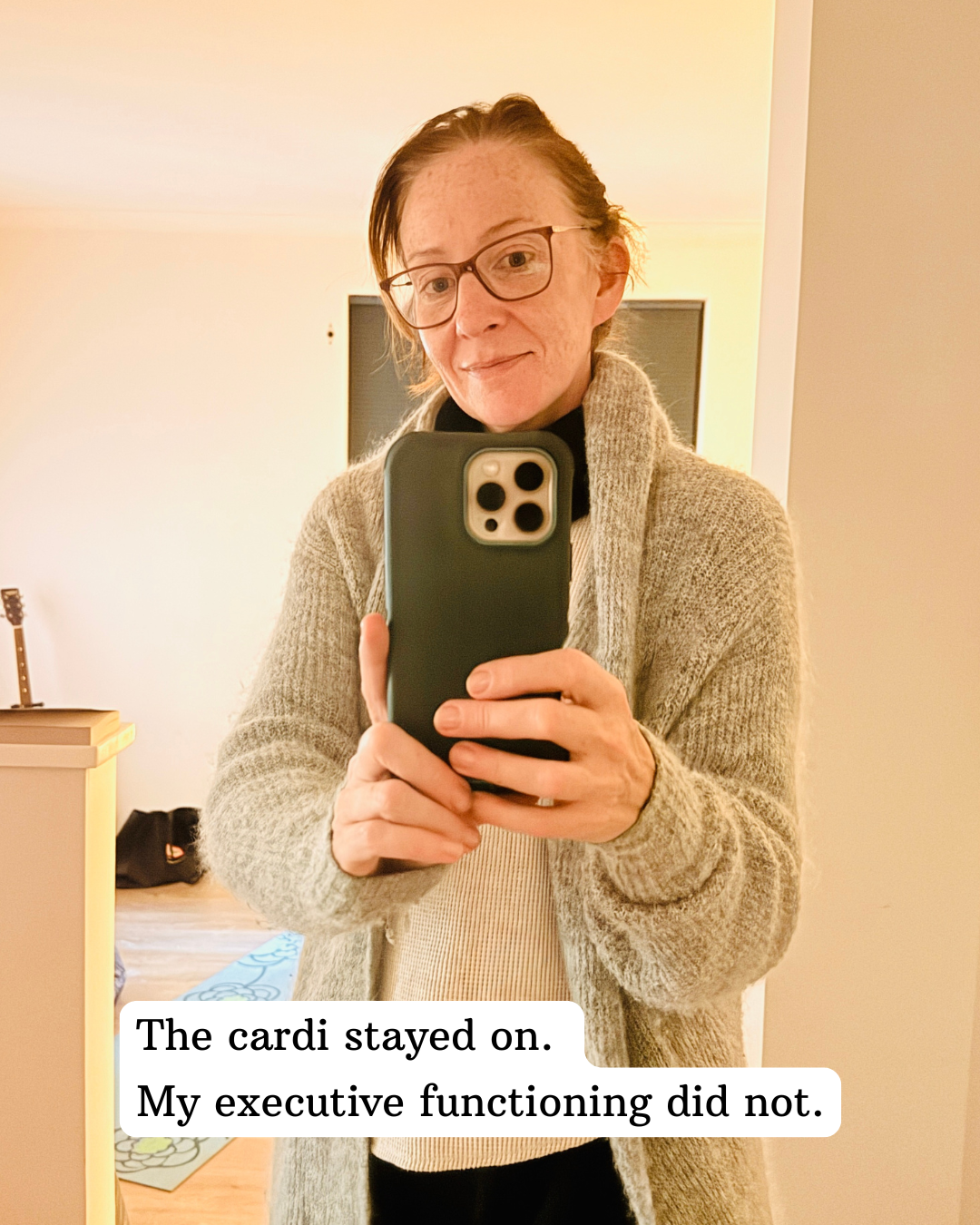
Side eye to the woolly cardigan I threw on today that has been itching my neck for hours, while I have mostly ignored it, despite knowing my neck will probably end up red with claw marks later.
Anyone else might simply take the cardigan off.
My brain has instead chosen: “Notice discomfort. Do nothing. Suffer. Continue task. Become quietly furious.”
Very innovative. No notes.
The Trouble with ‘All the Things’
And then there’s food, movement, hydration, getting dressed, leaving the house, replying to messages, existing in fabrics. All the tiny things that suddenly feel about twelve steps too long.
So today, lunch was packet soup.
Was it glamorous? No.
Was it warm? Yes.
Did I need to be heated from the inside out like a sad little Victorian orphan? Also yes.
This is the kind of thing I talk about a lot with ADHD/AuDHD coaching clients: sometimes we assume we’re being lazy, inconsistent, or dramatic, when what’s actually happening is a capacity shift.
Winter can make everything feel harder because there’s more friction.
More sensory discomfort.
More transition resistance.
More “I know what I need to do, but unfortunately my body has voted no.”
More needing to negotiate with yourself like a hostage situation over a shower.
And when our capacity changes, our expectations often do not get the memo.
So we keep trying to run the same routines, hit the same goals, and complete the same tasks in the same way — while our nervous system is quietly saying, “Absolutely not, bestie.”
Hibernation mode is not laziness
When motivation drops, it’s easy to slip into the old familiar shame spiral.
“Why can’t I just do the thing?”
“Why am I like this?”
“Why was I fine last month and now folding laundry feels like preparing for battle?”
But ADHD and AuDHD brains are often highly sensitive to context.
Temperature, light, clothing, food, sleep, routine changes, sensory input, stress, hormones, grief, life admin, pet medical crises, general capitalism — it all counts.
Annoying, yes. But also useful to know.
Because if the issue is friction, then the answer is not always “try harder.”
Sometimes the answer is:
make the thing smaller.
Ask: what’s the smallest version that still counts?
The question I keep coming back to is:
What’s the smallest version of this that still counts?
Not the perfect version.
Not the impressive version.
Not the version you planned when you had sunlight, optimism, and a functioning nervous system.
The smallest version.
Exercise might be one stretch.
A shower might be washing your face and changing clothes.
Cooking might be packet soup.
Admin might be opening the document and then walking away because apparently that was enough bravery for one day.
This isn’t giving up.
It’s reducing the friction enough to stay connected to yourself and your life when your capacity is lower than usual.
Freya’s official position
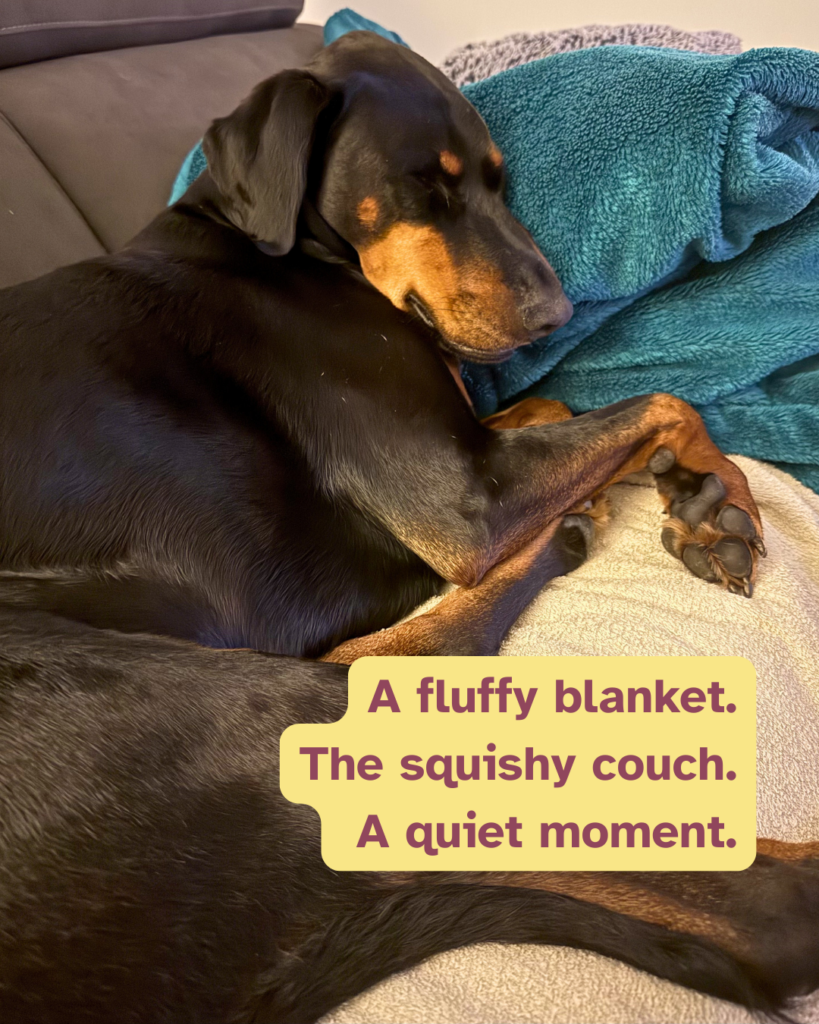
Freya, my rescue Doberman and unofficial VA, would like to add that she also experiences strong feelings about temperature, textures, routine changes, and being asked to do things before she is emotionally ready.
So, frankly, she gets it.
Her official productivity framework appears to be:
Honestly? There are worse systems.
Smaller, warmer, softer, more realistic
Winter hibernation mode doesn’t mean you’re broken.
It might just mean your systems need to become smaller, warmer, softer, and more realistic.
That might look like:
- changing into the least offensive clothing
- eating the warm, easy thing
- doing one stretch instead of a workout
- moving a task to tomorrow without making it a personality flaw
- putting the heater on before attempting the shower
- opening the document instead of finishing the document
- asking, “What support would make this less awful?”
The goal is not to force full-capacity output from a low-capacity nervous system.
The goal is to stay gently connected.
To your body.
To your needs.
To your routines.
To the life you are trying to build.
Even if today’s version includes packet soup, questionable knitwear, and a Doberman who thinks transitions are a human rights violation.
Over to you
What’s one thing your winter brain is making weirdly hard right now?
Freya and I are accepting submissions.
I’m currently at capacity with coaching clients and closed to new discovery calls until late July, but I’m getting back into writing and sending the occasional useful, quirky email about ADHD, AuDHD, capacity, and making life less feral. You can join my email list below.
Like this kind of reflection?
Join my email list for occasional notes on ADHD/AuDHD, life and work, identity, burnout, self-awareness, and building a life that actually fits your brain.